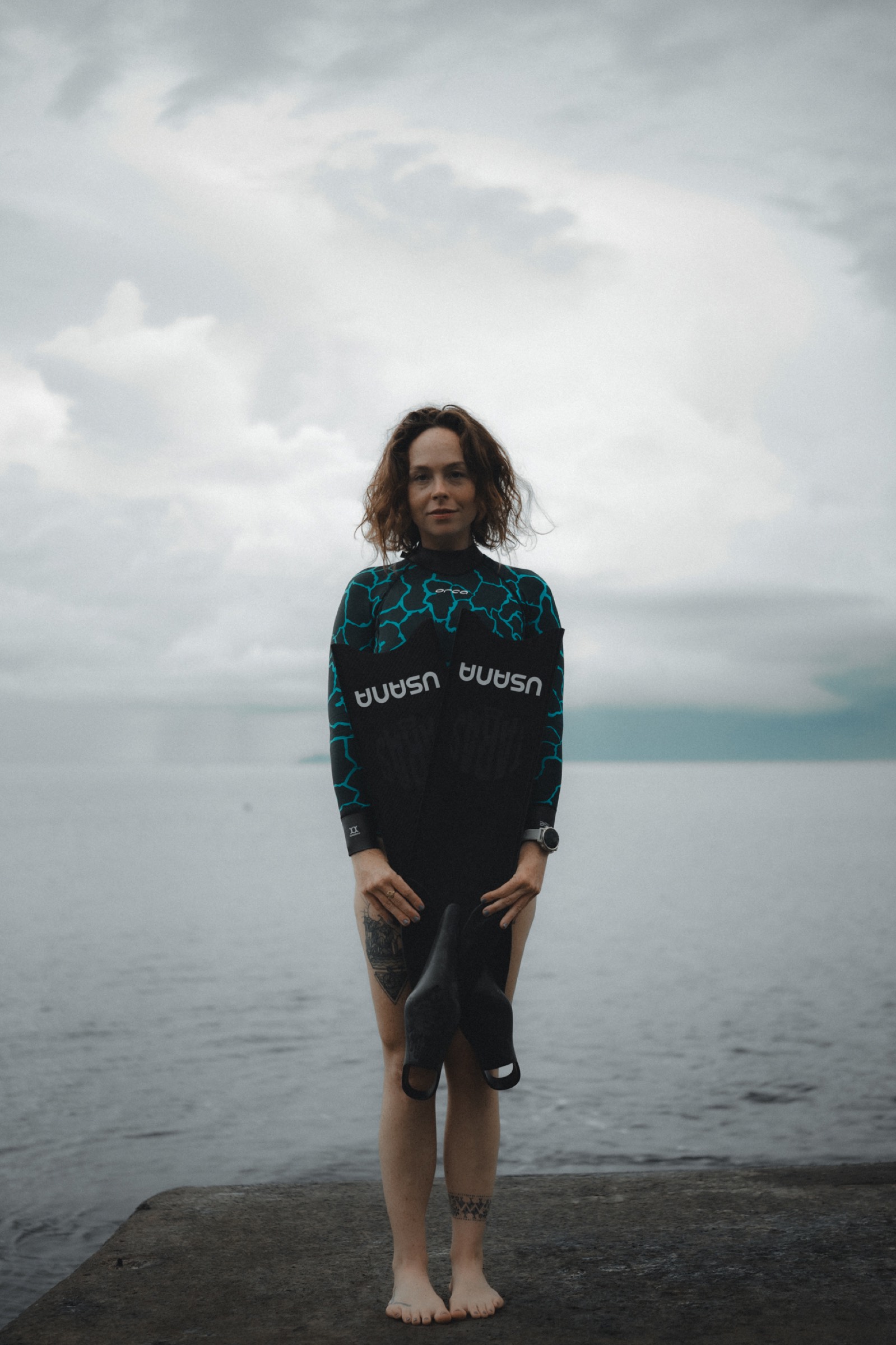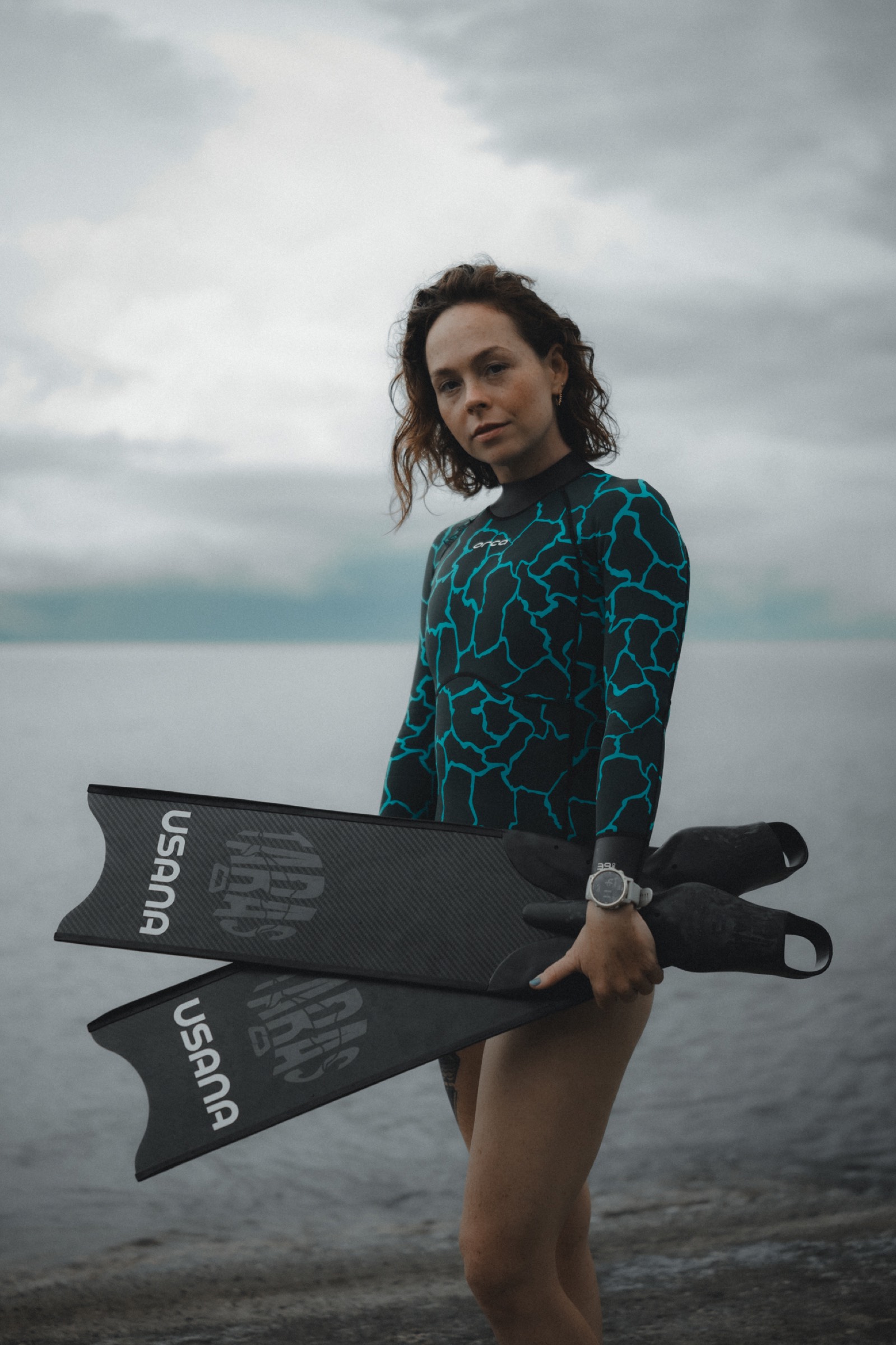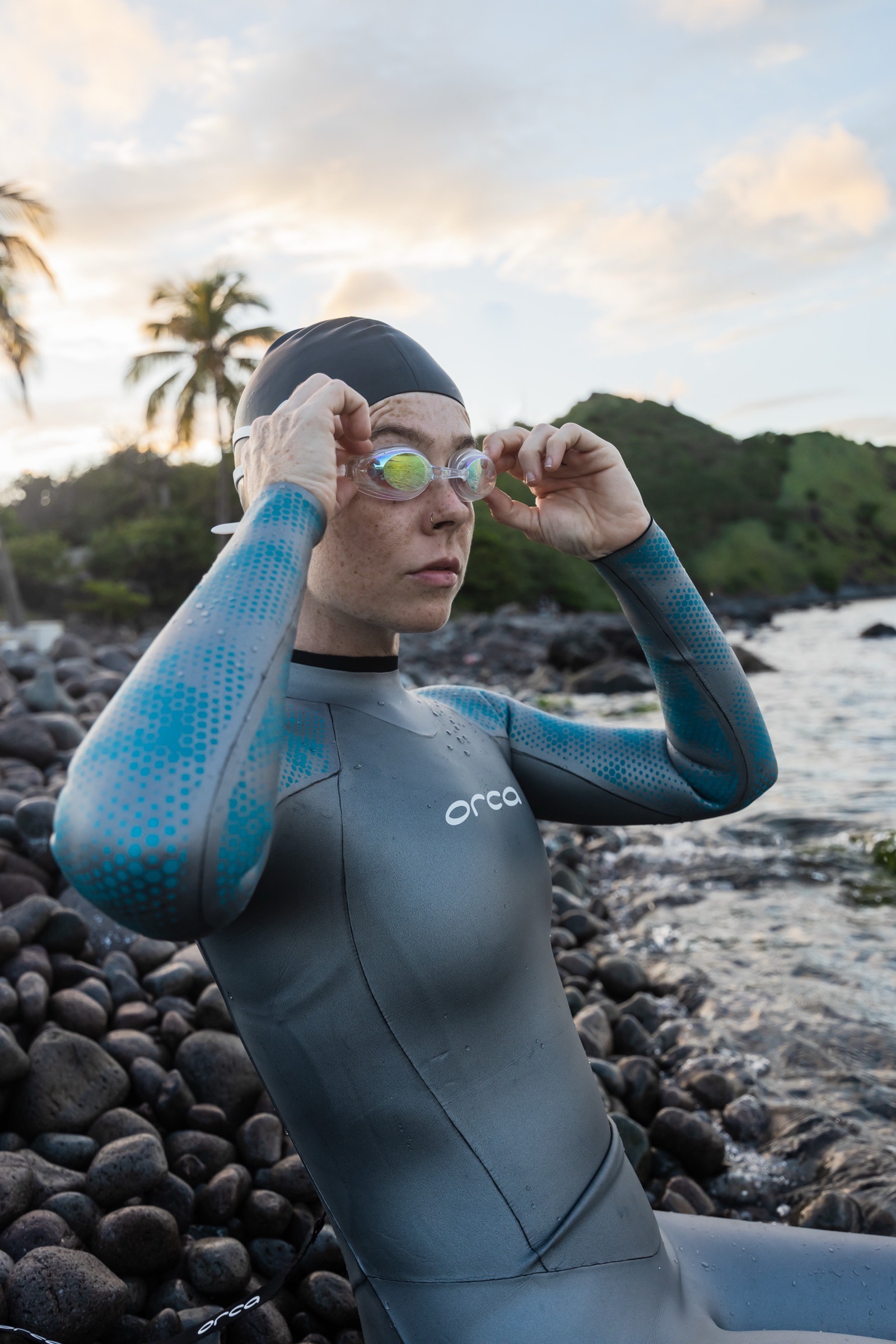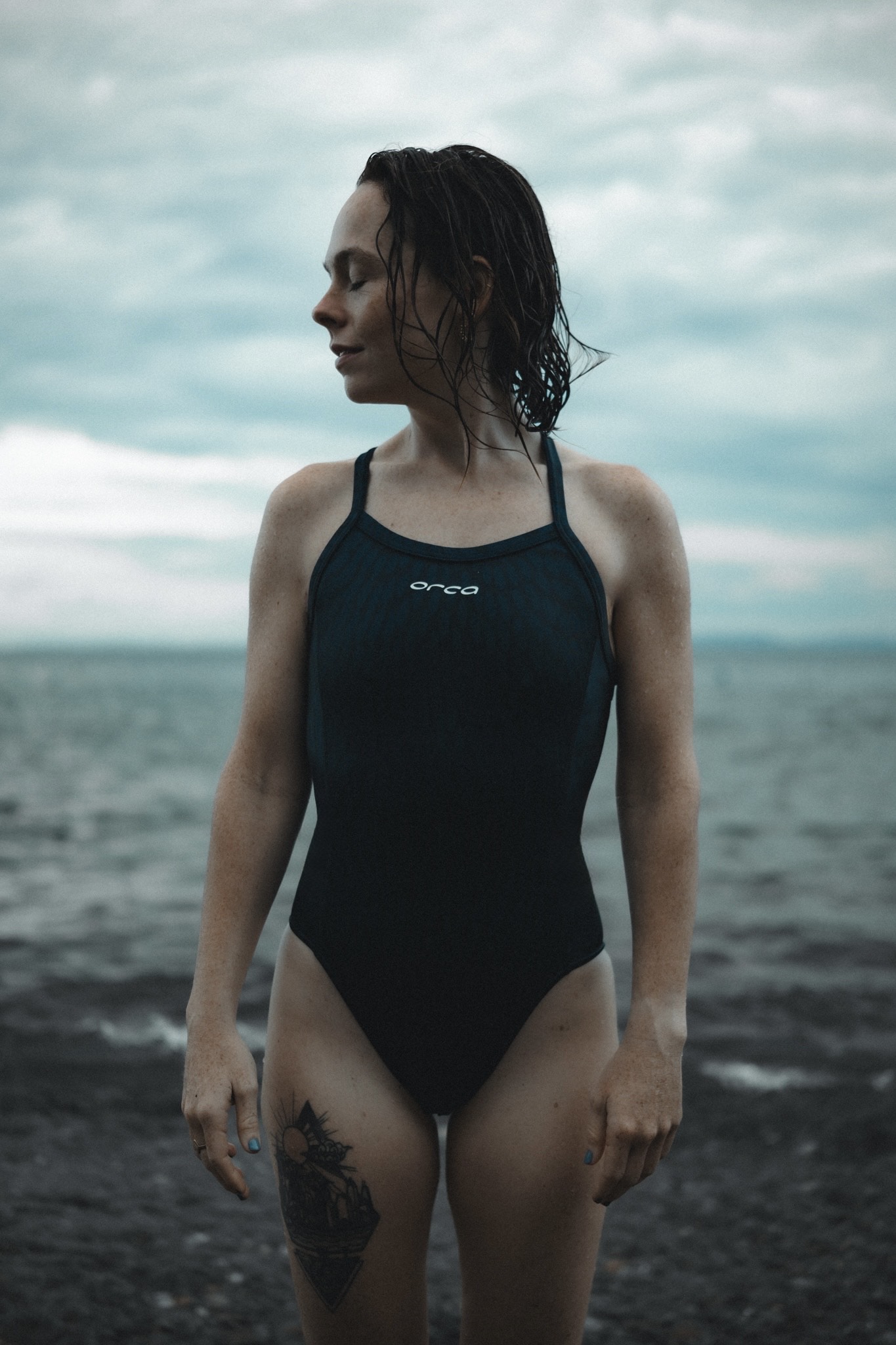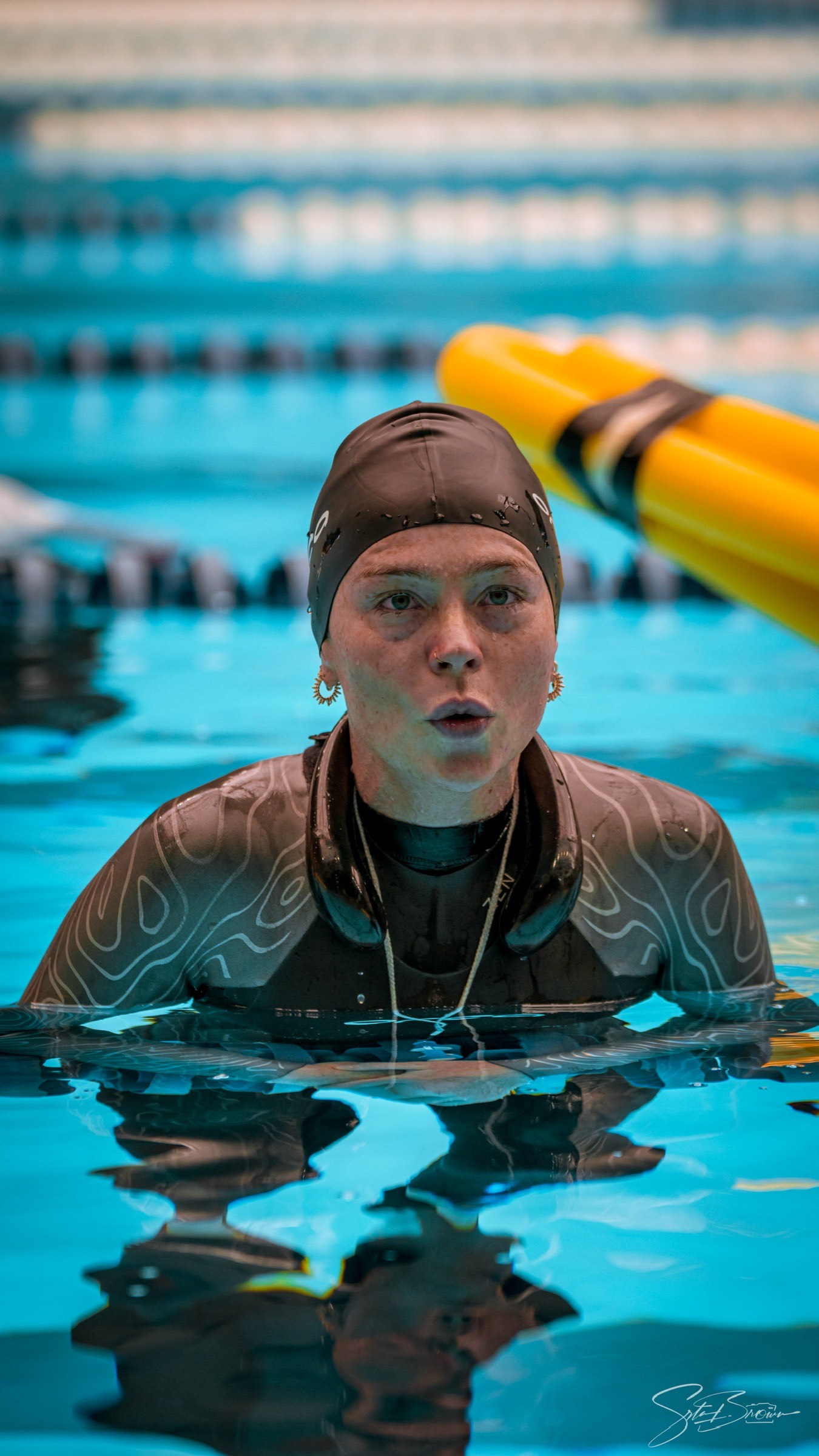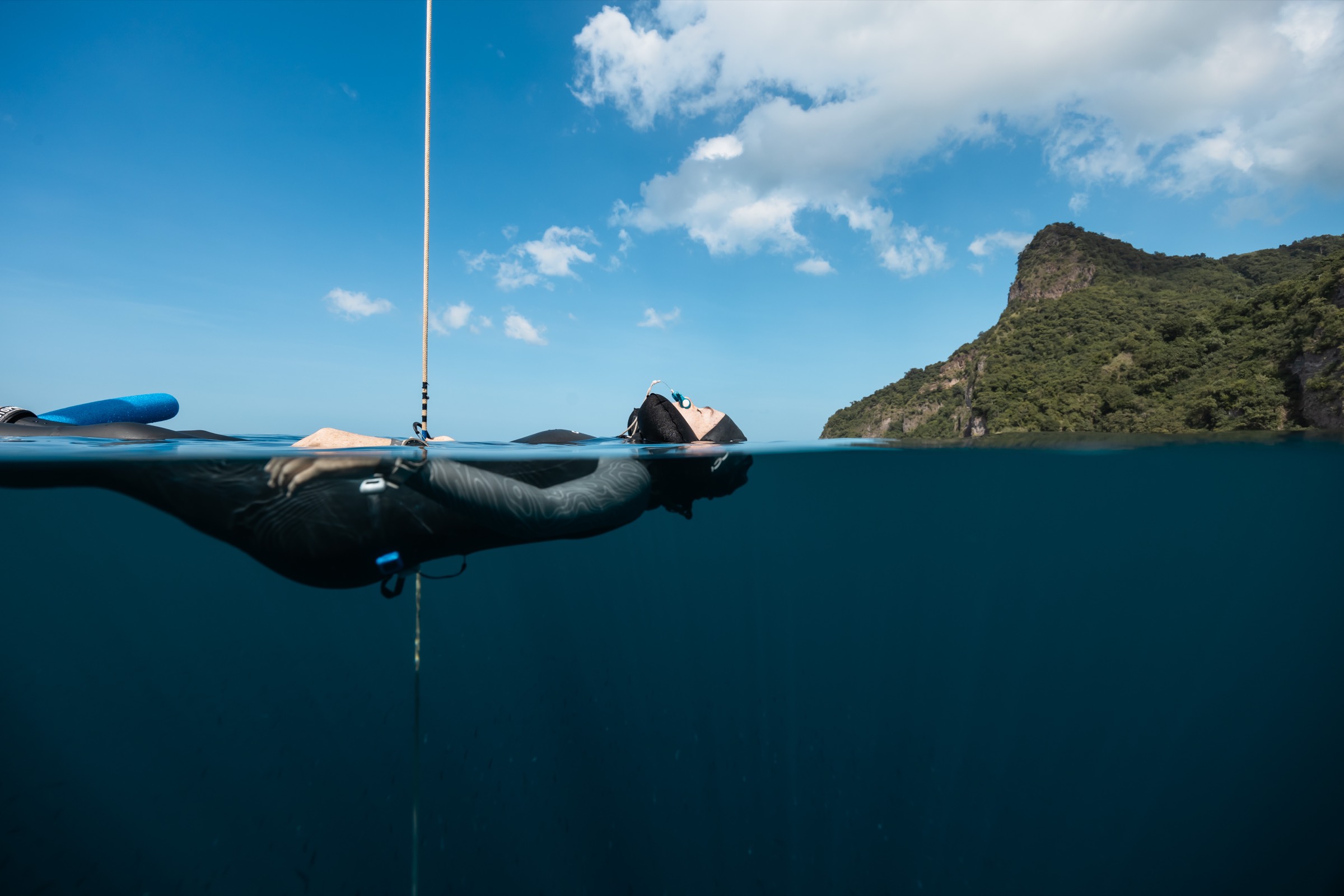
I started swimming at four, just outside Chicago. Underwater was where I first felt calm — long before I had a word for it. I think it was the quiet that pulled me in.
I grew up immersed in sport, studied Kinesiology and Sports Science, and built a career as a sports massage therapist in Chicago. For years the water was something I trained in — not yet something I listened to.
After several years at Chicago's pace, I moved to Thailand. In 2021, on the island of Koh Phangan, I took my first freediving course. With a background in swimming, yoga, and meditation, it felt immediately familiar — as if the pieces had quietly been leading back to the ocean.
What began as curiosity became a path. I entered my first major competition in 2023 at the CMAS Depth World Championship in Roatán, and in 2024 turned to indoor and depth freediving — becoming the first American woman past 200m in dynamic, now 257m, and rising into the top ten women in the world in two and a half years.
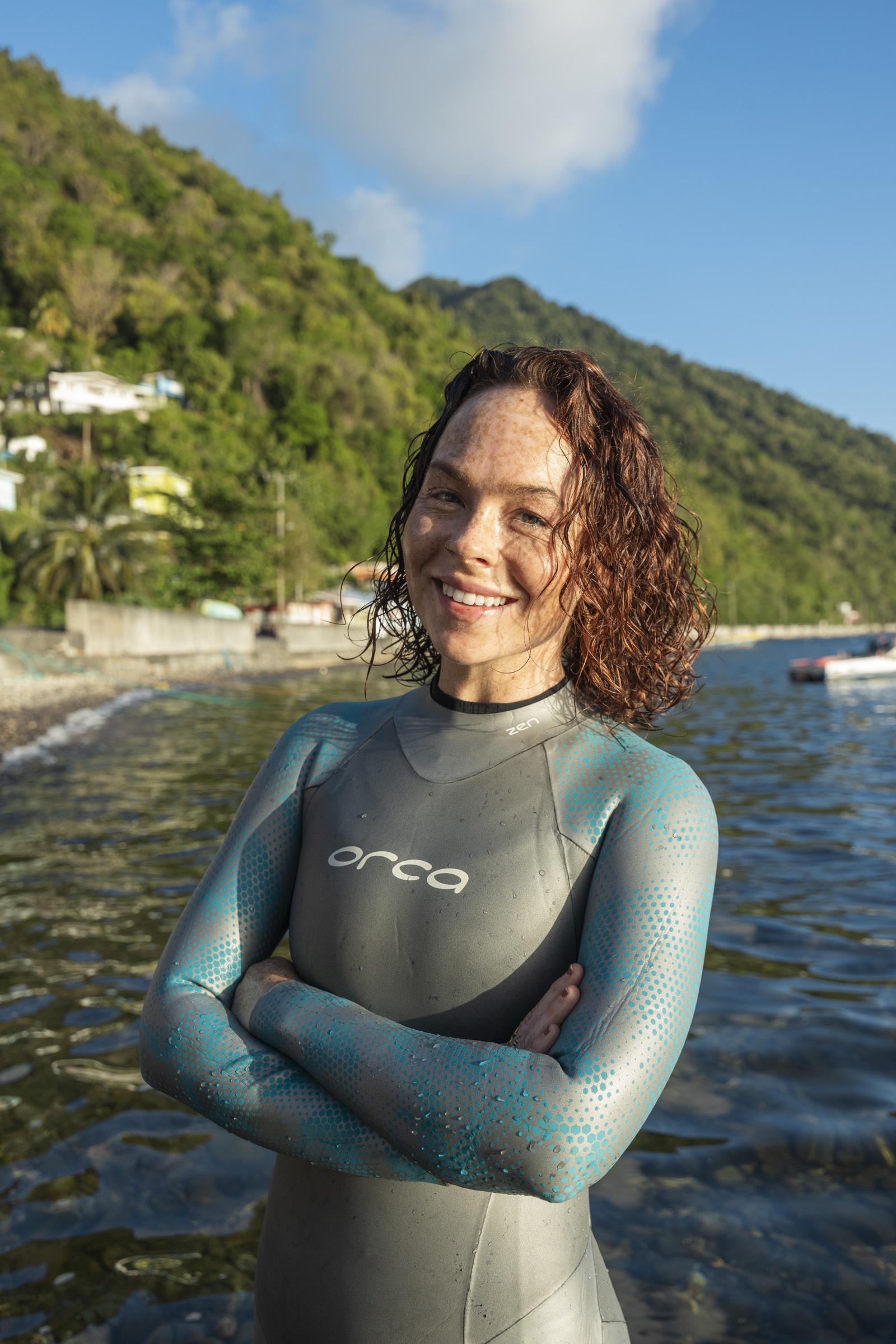
On the record.
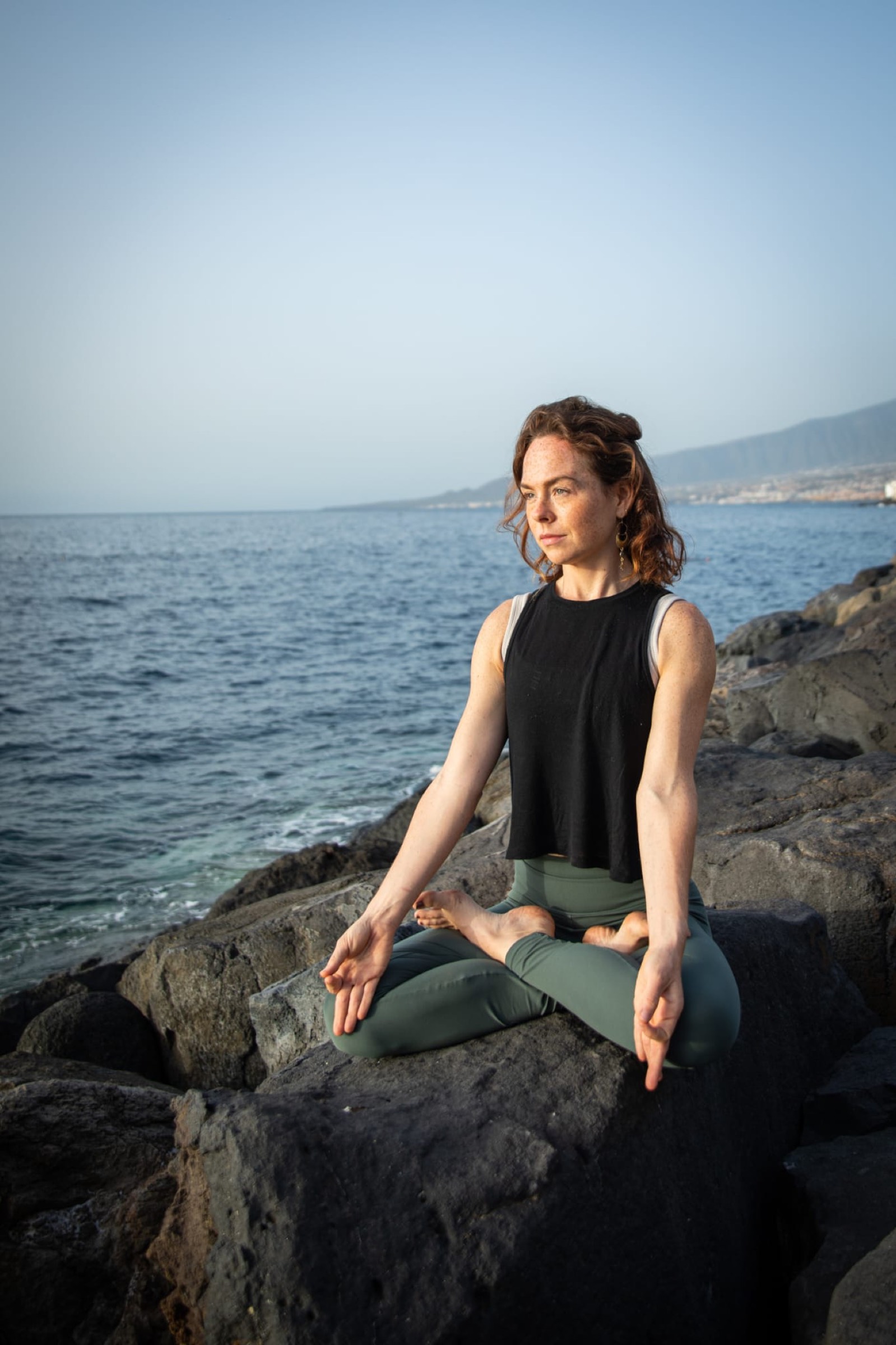
Calm is a trained capacity.
Every session begins with breath. Not as a technique, but as a way of arriving — of meeting the water with a quieter mind than you walked in with. That's the practice. That's what I teach.
My coaching is informed by a foundation in Kinesiology, NASM personal-training certification, a sports-massage license, and Yoga Alliance training — built on years as a competitive swimmer. I bring performance science, recovery, and breathwork together, because the divers who go furthest are rarely the most forceful — they're the most settled.
"Flow isn't found. It's trained."